|
| Light industrial - riparian ecotone, Laramie, Wyoming. |
ecotone (noun): Transitional area between two different ecosystems, such as a forest and a grassland. … contains elements of both bordering communities as well as organisms which are characteristic and restricted to the ecotone. (The Encyclopedia of Earth)Around here we assume that street plants—the green waifs of urban habitats—are exotic species. But not always. Some natives are quite capable of invading and thriving in human ecosystems. They do especially well where there’s a source of extra water—ditches, rain gutters, drain pipes, runoff from pavement. People generally consider these plants to be pesky weeds, even though they’re native.
The warehouses west of my house are fertile ground for weedy natives. Development has exposed lots of bare dirt—open habitat. There’s less concern about keeping things tidy than in town; weeds don't offend and left alone. Water runs off the roofs and pavement. And just west of the warehouses is the Laramie River, lined with riparian vegetation. Several riparian plants are willing and able to take up residence among the warehouses.
 |
| Russet seed heads of wild licorice, Glycyrrhiza lepidota. |


 |
|
Epizoochory: transport on the exterior of an animal, e.g. wild licorice burs in dog fur.
|

 |
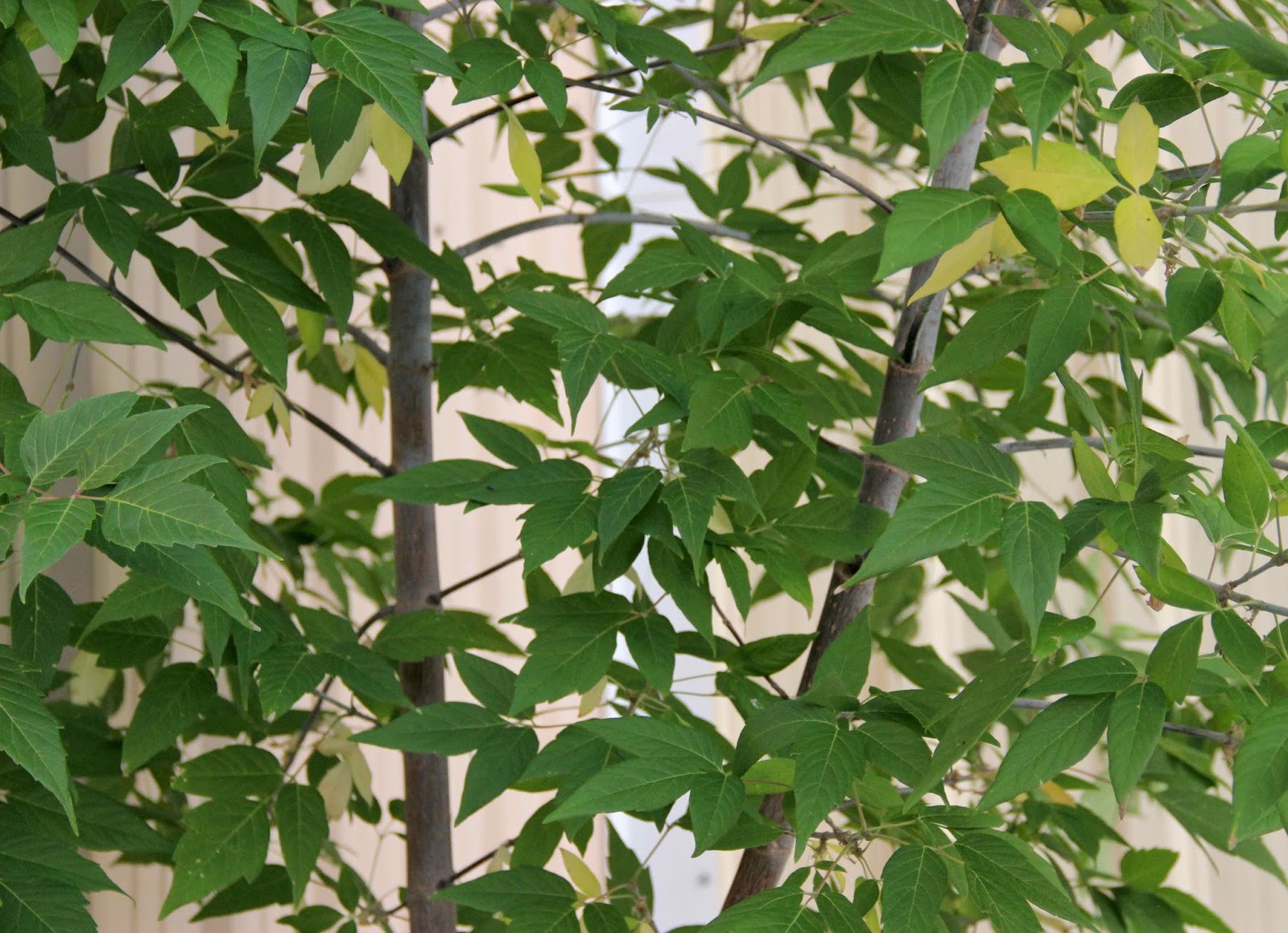
| Box elder, Acer negundo. |
But the buds hold a promise: it will again be warm enough to grow!


Small cottonwood trees grow along a ditch carrying rainwater from neighborhood storm sewers to the river. Whether they started as seeds or suckers is impossible to say. One fell earlier this year, taking the chain link fence with it. I presumed it was precariously rooted in the ditch bank, and high winds took it down. But when I looked over the bank, I discovered this:

It was a beaver that felled the cottonwood, not wind. Now it can feast on bark and twigs (soft inner parts), and collect branches to add to its lodge—maybe the big one nearby on the river.
 |
| Tell-tale tooth marks. |
 |
| Nearby beaver lodge on a warm green day. Have faith, it will be like this again! |
Street plants are the subject of a bi-monthly virtual gathering started by Lucy and now hosted here. Do you have news of street plants? If so, please leave a link in a Comment below.